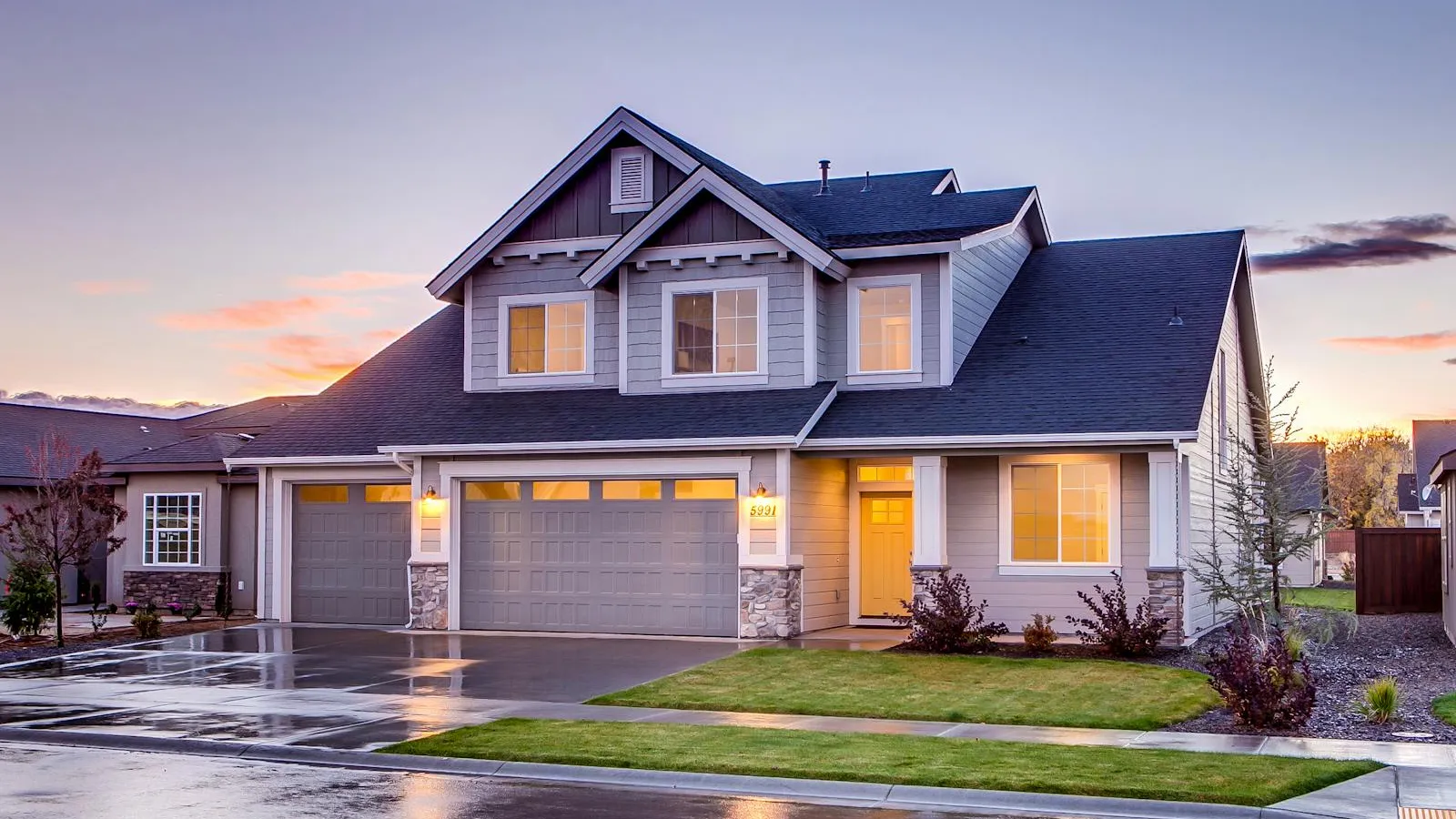
If you've been telling yourself "maybe next year" since 2022, I have news for you: next year is now. The OKC metro spent three years in a tight, fast, sometimes ugly market, and 2026 is the first spring in a while where a first-time buyer can actually breathe. Rates have eased back into the low 6s, inventory is climbing, and sellers are negotiating again. That doesn't mean buying is easy — it just means the door is finally open.
This is the playbook I walk every first-time buyer through, in plain language, no jargon, no fluff. By the end you'll know exactly what to do this week, this month, and the day you sign.
First, the lay of the land (the OKC market in 2026)
Here's the snapshot I give clients on our first call:
- Median home price in OKC: about $259K–$276K, depending on which source you trust. Edmond, Norman, Moore, and Yukon all run higher; the southside and parts of MWC run lower.
- 30-year mortgage rates: averaging in the 6.1%–6.4% range. Down from the 7s we lived through, but still not the 3% party of 2021. Bank on the 6s when you do your math.
- Inventory: up modestly. Translation — you'll actually get to tour a few houses before deciding, instead of writing an offer in the driveway.
- Negotiation: back on the menu. Seller concessions, rate buy-downs, repair credits — all things that were unicorns in 2022 are real again.
Prices are still expected to creep up 2–4% this year, so "wait for the bottom" is the wrong game. The right game is buy when your finances are ready and the right house shows up — and use the 2026 market's breathing room to negotiate hard.
Step 1: Get your money story straight
Before you tour a single house, you need three numbers and one document.
The three numbers:
- Your credit score — pull it free at annualcreditreport.com. For the best rates, you want 740+. For FHA you can go as low as 580 (sometimes 500 with a bigger down payment). Below 620? Don't panic — we have a path, it just takes a few months of cleanup first.
- Your debt-to-income (DTI) — add every monthly debt payment (car, student loans, credit card minimums) and divide by your gross monthly income. Under 43% is the FHA ceiling, but lenders love to see you under 36%.
- Your savings — for a $275K home, plan on $3K–$5K for inspection/appraisal/earnest money up front, plus 3.5%–5% down ($9,600–$13,750), plus 2%–3% in closing costs. The good news: a lot of that down payment doesn't have to come from your own pocket. Keep reading.
The one document: your last two years of tax returns and your last two months of pay stubs and bank statements. Get them in a folder now. Every lender will ask, and the buyers who close fastest are the ones who don't scramble.
Step 2: Get pre-approved — and know the difference
A pre-qualification is a five-minute conversation. A pre-approval is a real underwriter looking at real documents and committing — in writing — to lend you a real number. Sellers in OKC know the difference. So do listing agents. Show up with a pre-qual and your offer goes to the bottom of the stack.
Talk to at least three lenders. Rate matters, but so does fee transparency and how fast they actually answer the phone. I keep a short list of local lenders I trust — including a couple who specialize in bilingual closings and ITIN loans — and I'm happy to share it. No kickbacks, no games. Just lenders who treat people well.
One thing nobody warns you about: shopping multiple lenders within 14 days only counts as one credit inquiry. So shop in a tight window, don't spread it across two months.
Step 3: Stack the deck with down-payment help (most buyers leave this on the table)
Oklahoma has one of the best down-payment assistance ecosystems in the country, and most first-time buyers I meet have never heard of it. Here are the ones that move the needle in 2026:
- OHFA Gold — a grant for 3.5% of your loan amount toward down payment and closing costs. First-time buyers and folks buying in "targeted areas." No payback. Pairs with FHA, VA, USDA, or conventional loans.
- OHFA Dream — same 3.5% grant, but income limits go up to $150K. Open to repeat buyers too. Good if you make a bit more.
- REI Down Payment Assistance — up to 5% of your loan, structured as a gift, a 7-year forgivable second, or a 10-year amortizing second. Bigger help if you qualify.
- OHFA 4Teachers — for teachers, a reduced mortgage rate plus the 3.5% grant. If you teach in OKC, MWC, Putnam City, Edmond, or anywhere else in the state, this should be your first call.
- OHFA Shield — same idea, for firefighters, police, and EMS.
Here's the catch: you have to use an OHFA-approved lender (there are 80+ of them in Oklahoma), and you have to apply before you close, not after. Bring this up on your first lender call — if they get cagey or unfamiliar, find a different lender.
Step 4: Hunt smart, not fast
The 2026 market gives you something 2022 didn't: time to think. Use it.
Pick your neighborhood before you pick your house. Spend a Saturday driving Edmond, Yukon, Mustang, Moore, Norman, the OKC core, MWC. Walk the streets. Stop for tacos. Notice the traffic at 8 a.m. and 5 p.m. Schools matter even if you don't have kids — they drive resale.
Run the numbers on every property, not just the cute ones. A $310K house at 6.25% with 3.5% down lands around $2,250/month after taxes, insurance, and mortgage insurance. If that number scares you, look at $260K. Better to buy under your ceiling and breathe than to scrape every month and resent the house.
What to look for at the showing:
- Roof age — OKC has hail. Insurance companies care a lot. A 15-year-old roof is a giant red flag.
- HVAC age — a 20-year unit means a $7K–$12K replacement is coming.
- Foundation cracks — Oklahoma soil moves. Hairlines are normal. Stair-step cracks in brick or doors that won't close are not.
- Storm shelter or safe room — a real selling point, and worth budgeting for if there isn't one.
- Smell — pet odor, mildew, smoke. Sellers will hide a lot, but their nose-blindness is your edge.
Step 5: Make the offer that wins without overpaying
This is where having a real agent on your side stops being optional. There are six levers in every offer — price is just one of them. The other five are how you actually win in a balanced market without leaving money on the table:
- Earnest money — 1% is standard in OKC. Going higher signals seriousness without costing you anything if the deal closes.
- Closing date — sellers care more about this than buyers realize. Ask what works for them.
- Seller concessions — in 2026 you can usually get 2%–3% toward your closing costs or a rate buy-down. Ask. Always ask.
- Inspection period — 10 days is normal. A shorter window is more attractive to sellers; just don't go so short you can't actually inspect.
- Appraisal contingency — keep it. If the home doesn't appraise, this protects you.
- Personal letter — illegal in many states for fair-housing reasons; we don't use them.
A rate buy-down from the seller is the most underrated 2026 move. Instead of dropping the price $10K, ask the seller to put $10K toward buying your interest rate down for the first two years. That can knock $200–$300 off your monthly payment when you need the cushion most.
Step 6: From contract to keys
Once your offer is accepted, the next 30–45 days look like this:
- Days 1–10: inspection. Hire your own inspector — don't use the seller's. Plan on $400–$550. Read the full report. Negotiate repairs or credits on anything material.
- Days 10–21: appraisal. Your lender orders it. If it comes in low, we either renegotiate price, you bring the gap in cash, or you walk (if you kept the contingency — see why that matters?).
- Days 21–30: final underwriting. Do not — and I mean do not — buy a car, open a credit card, change jobs, or move money between accounts during this window. I have watched closings die over a Best Buy credit card opened the week before signing.
- The day before closing: final walkthrough. We confirm repairs are done and the house is in the condition you agreed to.
- Closing day: you sign a stack of paper, wire your funds (verify the wire instructions by phone — wire fraud is a real and growing threat), and you get keys.
Bring snacks. You'll be there a while.
If you're new to the U.S. system, you have options
A big part of my practice is the Hispanic community in the OKC metro, and I hear the same worries on repeat: "I don't have a Social Security number." "My credit is thin." "My income is cash or 1099." "I'm worried about being taken advantage of."
Here's the short version:
- ITIN loans exist. They're real mortgages, usually with slightly higher rates and a larger down payment (often 10–15%), and they let you buy a home without an SSN.
- Thin credit can be built in 6–12 months using a secured card and a small auto loan paid on time. Don't let an old anecdote about a "no credit" purchase fool you — most lenders need some tradelines.
- 1099 and cash income can qualify, especially with two years of tax returns and a tax preparer who knows what they're doing.
- You deserve every document explained to you in the language you think in. If a lender, title company, or agent gets impatient when you ask questions — find another one. There are plenty of professionals in OKC who do this work bilingually and properly.
You can absolutely buy a home in Oklahoma. The system is built to be navigated by anyone with a steady income and the right team around them.
Common potholes I watch people hit (and how to skip them)
- Buying at your maximum approval. Your lender will approve you for a number that assumes you eat ramen forever. Approve yourself for a number that lets you keep saving.
- Skipping the inspection to win a bid. Don't. A $500 inspection can save you a $25,000 surprise.
- Falling in love with photos. Real estate photographers are wizards. Tour the house.
- Forgetting the "after move-in" costs. A washer, dryer, fridge, blinds, and a lawn mower add up fast. Plan $3K–$5K in your back pocket.
- Going it alone. Buyer's agent commission is typically covered in the deal structure. There is almost no scenario in 2026 where it makes sense to navigate this without a real advocate on your side.
The 2026 window is open. Don't sleepwalk through it.
Three years from now, when rates probably drop further and prices have crept up another 8–12%, the buyers who moved this year are going to look smart. You don't have to time the bottom. You just have to be ready when the right house and the right financing line up — and use the down-payment programs your tax dollars already paid for.
If you read this far, you're more prepared than 90% of the buyers I meet on day one. Let's talk.
Ready to put this into motion?
Book a free 20-minute strategy call. I'll walk you through your numbers, the OHFA programs you qualify for, and what your first 30 days actually look like. In English or Spanish — whichever you think in.
Schedule my call